11.15.2010

Saying goodbye to Latin America

Modern art museums, hipster vegetarian bars, a great metro, dollar beers, an obsession with recycling. Medellin was a vibrant city and the perfect place to say goodbye to Latin America.


Drinks with Chucho, our gracious host for the week.  How gracious was he?  Well, he and his girlfriend actually flew to Bogota for the weekend and left us the keys to their place.  Man, what a kickass couchsurf.


On our final day, we treated ourselves to paragliding in the hills above Medellin. Hell of an experience.


A quick video of the end of my paragliding experience, where my guy informs me we'll be crash landing in a field instead of back up at the top of the mountain.  Greeeat.  But at least as a final bribe, he spun us like crazy.


Now I'm in that weird limbo between not wanting the experience to end and feeling good about the prospect of some TLC back home. A hot shower and some clean clothes after living out of my backpack for two weeks sound amazing.

11.11.2010

The definition of "off the grid"

Man, it's been a crazy past couple weeks.

Currently writing from cloudy Medellín, Colombia, one of my new favorite cities. Incredible place. Super cosmopolitan. A big change from where I spent the past week (more on that in a minute).

Lauren and I are couchsurfing with a cool couple here, an architect and theater teacher, both originally from Medellín. They've got a swanky apartment in a quiet neighborhood and are showing us all that this city has to offer, although Medellín sort of sells itself after a few hours of strolling its streets and hopping in and out of open air cafes searching for the best cup of tinto, what they call a strong cup of black coffee. Very european feeling.

Before we arrived here, however, we were in a totally different world, both physically and mentally. We had been making our way south little by little to catch my flight from Medellín to Boston on the 15th. After taking a 16-hour overnight bus from San Sal to San Jose, we hitchhiked to the Panamanian border and then met up with our Peace Corps friend David in Panama City.

Quick note about Panama City. Damn what a different world. It was like walking on the moon at times. Nothing like the Central American capital cities I was used to. Clean and suuuper developed. That, combined with the fact that they're on the American dollar, meant you had to remind yourself every so often you were in Central America and not in Miami, especially when the supermarkets have Guinness for 69 cents a can. What?!!!

David took us to all the spots - the canal, the former U.S. army bases, the causeway. And as an added bonus, we were lucky enough to arrive just as the national independence holidays were starting up, when the entire city shuts down for a three day party.

Here's a shot from our private tour of the craziness that is Panama City.


But despite the good times, after a couple days we had to move on. I had a plane to catch, after all.

For the majority of world travelers country-hopping in Central and South America, it's rare to stray too far from the Pan-American Highway, a 30,000 mile road stretching from Prudhoe Bay, Alaska to the tip of South America (both Chile and Argentina claim the highway's end). Backpackers shuttle up and down it like New Yorkers riding the 6 train. For the most part, it's smooth sailing until they hit something called the Darién Gap, a virtually impassable rain forest separating Panama and Colombia. For 60 years, this mountainous region is the only break in the north-south highway, yet because it's undisputed FARC territory, I don't think that's going to change anytime soon.

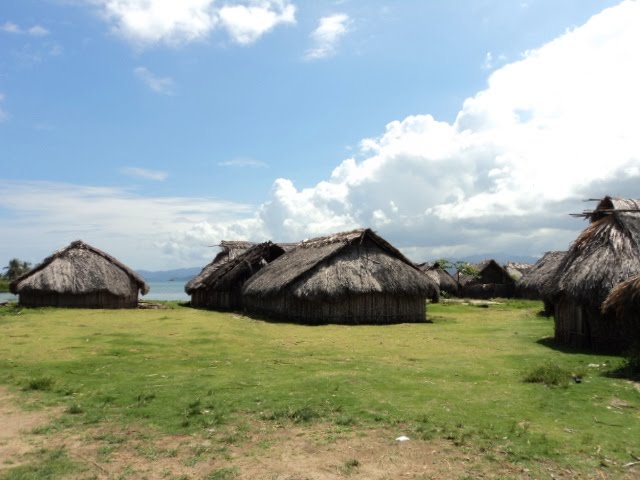
To circumvent the gap, most people opt for the hour and a half flight from Panama City to Cartagena or Medellin. But those with the luxury of time and the curse of a tighter budget cross the border by boat through the San Blas islands, a 365 island archipelago also known as Kuna Yala, which means "Land of the Kuna."

As ex-PCVs, Lauren and I were pretty strapped for cash, and the $300 flight was out of our league. Our plan was to island-hop for the week, making our way south. There's a lot of info on this route on the internet and it's becoming more and more popular, as only 49 of the 300 plus islands are inhabited and a week snorkeling off the islands and sleeping in hammocks on the beach can be an unforgettable experience, despite the trouble of getting out there.

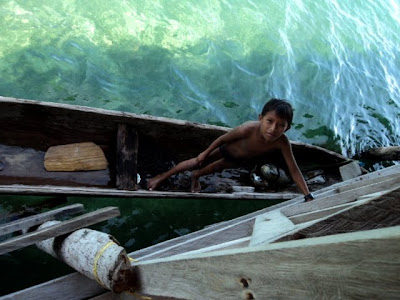
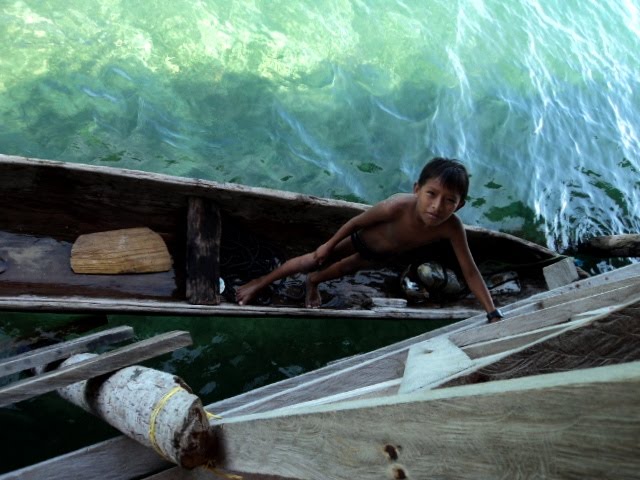
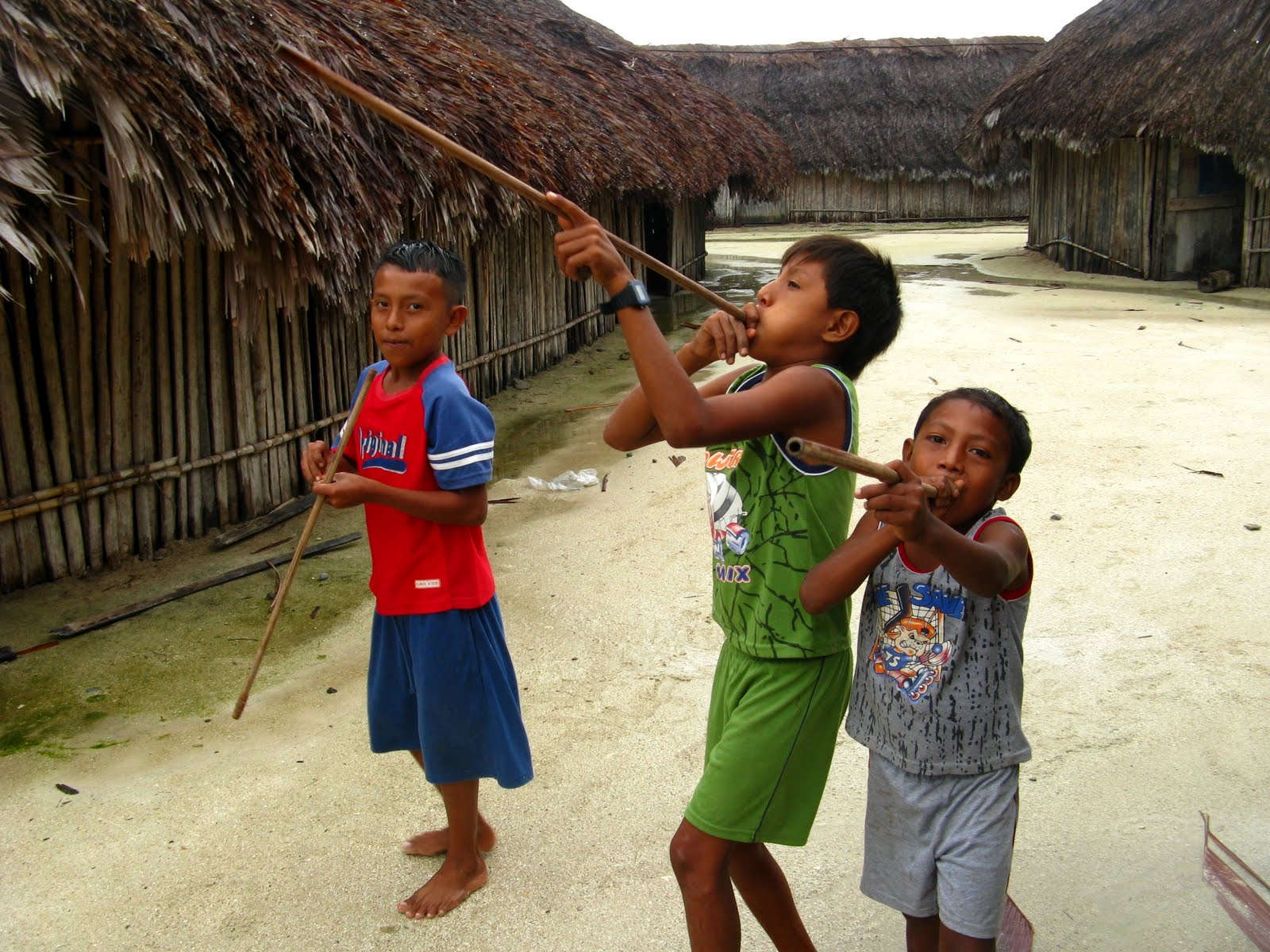
Well, it was all fun and games for us until we found ourselves stranded on one of those islands because of lack of transport and bad weather. Lucky for us, the inhabitants of the islands, the Kuna people, had a place for us to stay and were incredibly open.

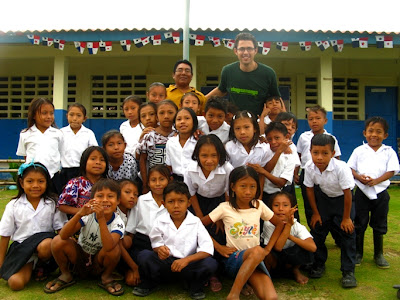
Each day we did our best to endear ourselves to the community by fishing with the kids on the dock and entertaining them with the magic thumb trick. So powerful, the magic thumb trick.

I'll write more later, but here are some pics until then...


A Kuna woman sewing a mola, a traditional hand-sewn cloth, which the women wear along with elaborate beaded bracelets and anklets.
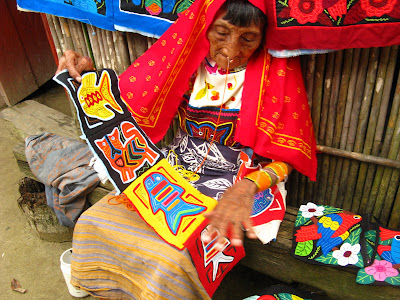

The Kuna are fascinating people. I spent most of my nights chatting with a small group near the dock while I ate dinner. Many books have been written on their rituals and history, but here are three things I found interesting.

For starters, the Kuna are matrilineal, which means women run the show and households are centered around the elder women. When a marriage is approved by the elder council, husbands marry into their wife's family's compound (unlike 90% of the world's societies).

Also, young girls are permitted to dress in western clothes until they reach puberty, at which point, the elder women cut the girl's hair and the community acknowledges her step into womanhood with week-long celebrations of seafood and fermented fruit wine typical to Latin America, called chicha.

Actually, on our last night on the island, this happened, and the entire community was beginning the preparations for the fiesta. We wouldn't have been able to attend anyway, but I still wish we could have been there for some part of it.

Finally, numbers and counting in Kuna vary depending on the shape of what you're describing. If you're referring to round objects, like three balls, for example, you would say "round-three balls." If you're talking about a longer shape, like a stick, you'd say "long-one stick." You get it? It's kind of complicated, but pretty damn cool if you think about it.


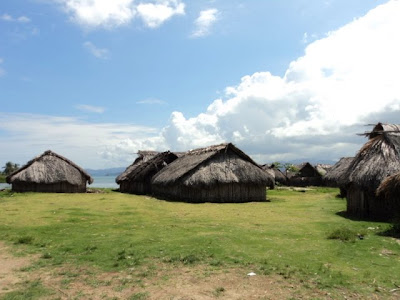


If we weren't on the dock with the kids, we were hanging out at our cabin, reading or occasionally jumping off into our own private ocean (but only when the tides were right (island community = floaters = bad, very bad)).


Eventually after three days, a Colombian cargo ship passed by and gave us a ride to the Panama-Colombia border port, Puerto Obaldia. Jesus christ it's been wild.


The ship was a memorable experience. The seas weren't exceptionally high, but being in a loaded cargo ship in open waters isn't always smooth sailing...

10.31.2010

Trick or treat from Costa Rica

Hit San Jose this afternoon, crashing for the night at a backpackers hostel, and then continuing on to Panama to chill for a couple days with our buddy David and hopefully catch a boat to Colombia.


I've loved seeing the geography and colors change as we've pushed further and further south. It's like we're heading deeper and deeper into the source of all things green, and the closer we get, the more intense it becomes. Looking forward to seeing what Panama and Colombia have to offer...

10.23.2010

What a long, strange trip it's been

Well, we're in the final countdown.

And if you know me, you won't be surprised to hear that I'm taking thousands of photos and videos in my last few days in the campo in an attempt to capture some of the "feel" of my Peace Corps experience and daily life for the past two plus years. But obviously that's impossible. There's no way to document the feeling of walking down a dusty road, hearing a familiar mixture of kids and chickens off in the distance, and feeling, well, happy. Or being able to stroll through the woods over to my neighbor Blanca's house to sip some burnt cowboy coffee and just sit for a hour or two while she prepares lunch for her family.

I was emailing with Jimbo about this the other day. That it's impossible to leave PC on one's own terms. And how, the last month of Peace Corps sucks. It simply sucks. So much to do and so little time. It honestly feels like time has been accelerating, rolling downhill and picking up speed despite my efforts to pull the e-brake and get everything back under control. Don't know where those days went when I had nothing to do but hang out on my porch and kick plastic bottles back and forth with Peligro. Ah well.

It's been a comfort for me to see your names in my inbox. To my family, Ellie, Amy, Katie, Chuck: thank you. Thank you for reaching out.

The only way to describe these last few days in my community would be as indescribably bittersweet. Happy to be moving on and beginning another chapter of my life, yet unabashedly ripped to pieces emotionally for the loss of friendships, routines and the life that I've become accustomed to.

Know that I am really looking forward to seeing you all and catching up when I'm back in November and December. Hopefully over a cold pint of IPA and some solid hot wings.

10.14.2010

The end of an era

A couple weekends ago, we bid farewell to another one of our own. A fellow third year volunteer, and a dear friend. The good news is, he's a southie kid and will be sharing dollar pints with me at Tom English's before the year is up.

So most volunteers, when they finally take off, plan a night out in the capital or the beach with their closest friends, who are usually nearing their end date themselves. Usually one last hurrah to cap a couple years of blood, sweat and tears in the developing world.

Joe, on the other hand, isn't your average volunteer. And it's not his style to go gently into the night.

No, for Joe's despedida (goodbye party), he rented out a beachfront house, complete with pool and space for 30 people, and threw the mother of all parties. He might have even had clowns and a unicorn petting zoo, but the two kegs and unlimited sushi kept me pretty well distracted.

Here are a few shots from the event...


The man of the hour


Rhett and Axel, two stand-up guys.


Fred loves him some chicken teriyaki.


Joe said a few words


And we dug into the feast.


Such a good vibe.


Later on, Sam learns why it's never a good idea to fall asleep in public.


The final product.

Approximately 10 minutes spent setting up...


...yet hours upon hours of enjoyment.


Sam was such a good sport. And, from conversations I've had with him, is turning out to be a hell of a volunteer.

9.22.2010

Armadillo. It's what's for dinner

Now for another installment of Where Your Food Comes From. Although in this installment, we're not talking your average food.

WARNING: you know where this is going... if you're not a fan of such things, skip this one.

Okay, so if you're a regular follower of my snoop blog, by now you've probably read my post on the bull we slaughtered for my friend's wedding last January. You'll know it was a pretty intense process, with the trade-off being that over a hundred people were fed from the death of one animal.

This time it was different. He was the underdog, and with chickens running around justifying their place in the world as the cornerstone of the food chain and making themselves known as only a chicken can (hopping up on the table, knocking over your coffee, shitting in your bed), one felt as though this little guy's life could have been spared. But I digress.

As with most animals killed in El Salvador, I can safely say that it suffered; it's just how we do things here. I'd love to say it was quick and painless, like my rabbits, but it sort of wasn't. He was a fighter. But know that the little guy died a noble death so that a family of six, plus three friends and neighbors, could eat well on El Salvador's national independence day, September 15th.

Alright, let's get on with it, shall we?

So last weekend, my neighbors and I killed a seven pound armadillo and ate it. Not nearly as much a process as killing and prepping the bull, but still one that I found oddly intriguing. Fasten your seatbelts. I took photos...


For starters, they're amazing looking critters. Check him out. Cute little ears, a snouty nose, and of course a fascinating armor shell that was surprisingly warm and flexible, like leather. Thought he'd be more like a turtle.

To kill one, you pretty much break its neck, make a small cut and drain the blood for a good while, occasionally washing it away as it coagulates. One thing I found interesting was that the dogs, normally diving over each other to grab a scrap of whatever Orlando is hacking up, didn't even go near this thing. It must have had such a funky flavor that it spooked even them.


Like defeathering a chicken, you pour boiling water on him and scrape off his scales. They reminded me of fish scales. Almost translucent.


Once he's been scaled, you cut off his head and gut him.


A few hacks to split him in two.


A little salt, some lime, and onto the fire!


Kate's a huge fan of armadillo, or cuzuco as it's called here in the campo.


All in all, kind of awesome. Starting to believe that clichéd saying that everything tastes like chicken.


By the way, as I was writing this post, I googled armadillos and stumbled upon my new favorite animal...

Behold the smaller than your cell phone, semi-endangered Pink Fairy Armadillo of Argentina. Kind of want to carry one in my shirt pocket at all times... and probably eat less armadillos.